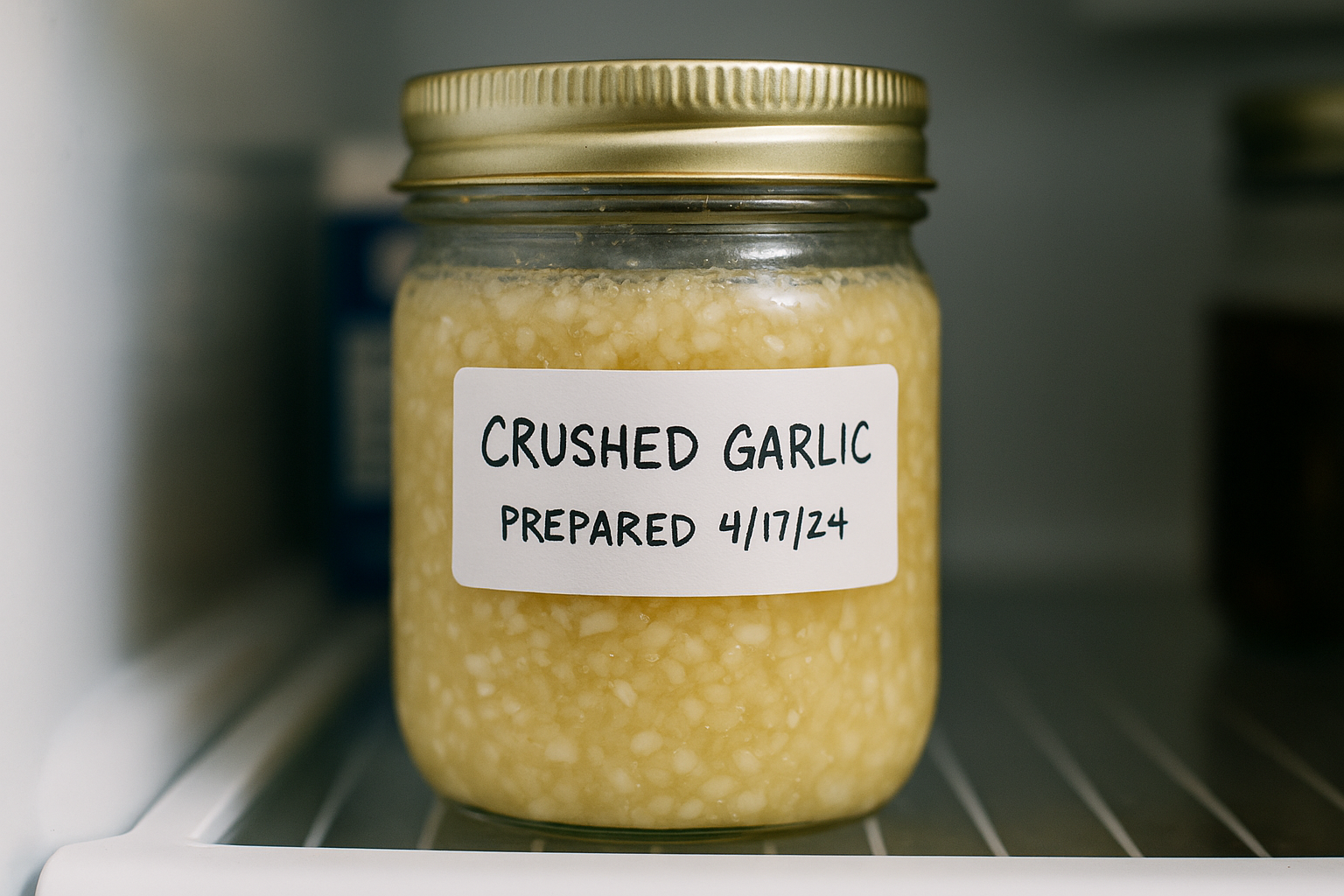
Have you ever pulled a jar of freshly crushed garlic from the fridge only to discover it’s taken on a blue-green hue? It looks alarming and might even make you wonder if it has spoiled. Many home cooks have the same question: Why did my crushed garlic turn green?
The good news is that the transformation is usually harmless. In fact, the color change is tied to the same chemical reactions that give garlic its signature aroma and flavor. Still, it can be unsettling, especially if you’re serving guests or preserving garlic for later use.
This guide dives into the science behind green garlic, explains how to prevent the color change, and shows why Dorot Gardens’ frozen garlic cubes make life easier for busy cooks.
The Science Behind Green Garlic
When you cut, mince or crush a garlic clove, you rupture tiny cells and allow two key compounds – alliin and alliinase – to mix. These naturally separate compounds react to form allicin, the sulfur-rich molecule responsible for garlic’s pungent smell and many of its health benefits.
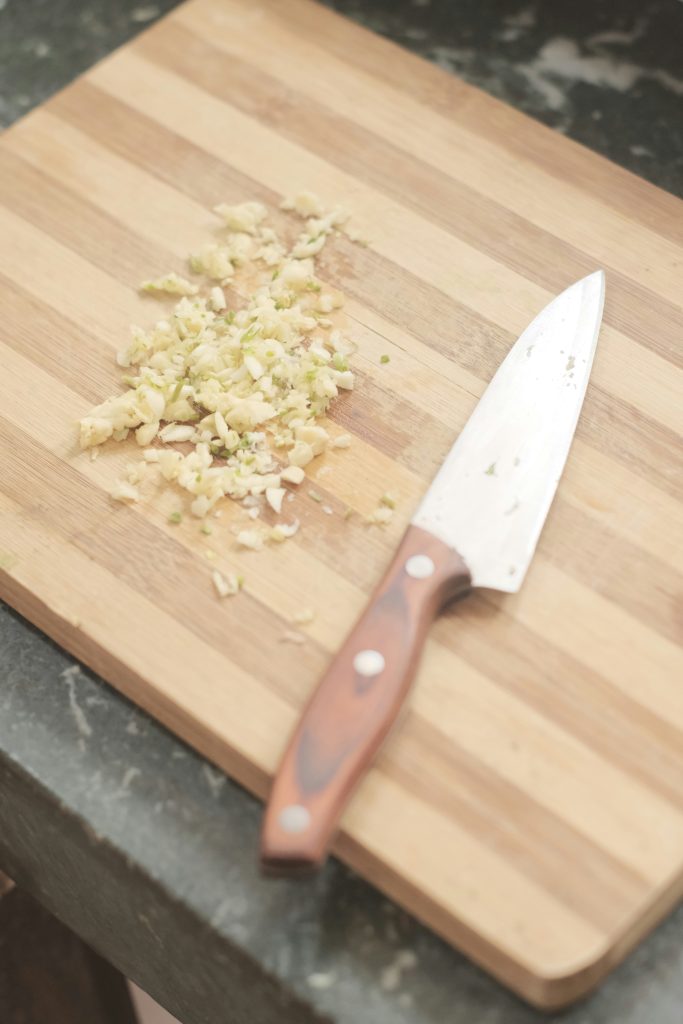
As the reaction continues, allicin can form pyrroles, ring-shaped molecules that change garlic’s color. If three pyrroles link together, the garlic takes on a blue tint; four rings create a green hue. The more allicin created, the stronger the garlic flavor and the higher the chance of color change.
Acidic environments accelerate these reactions. Vinegar, lemon juice and wine all contain acetic or amino acids that interact with allicin to form pyrroles. That’s why pickled garlic, aioli or marinades made ahead of time tend to turn green or blue.
Heat also plays a role: slow, low-temperature cooking allows enzymes to act longer, while high heat quickly denatures them, reducing the color change. Finally, age matters. Older garlic bulbs accumulate more alliin and alliinase as they dry out, making them more prone to color shifts.
So, Why Did Crushed Garlic Turn Green?
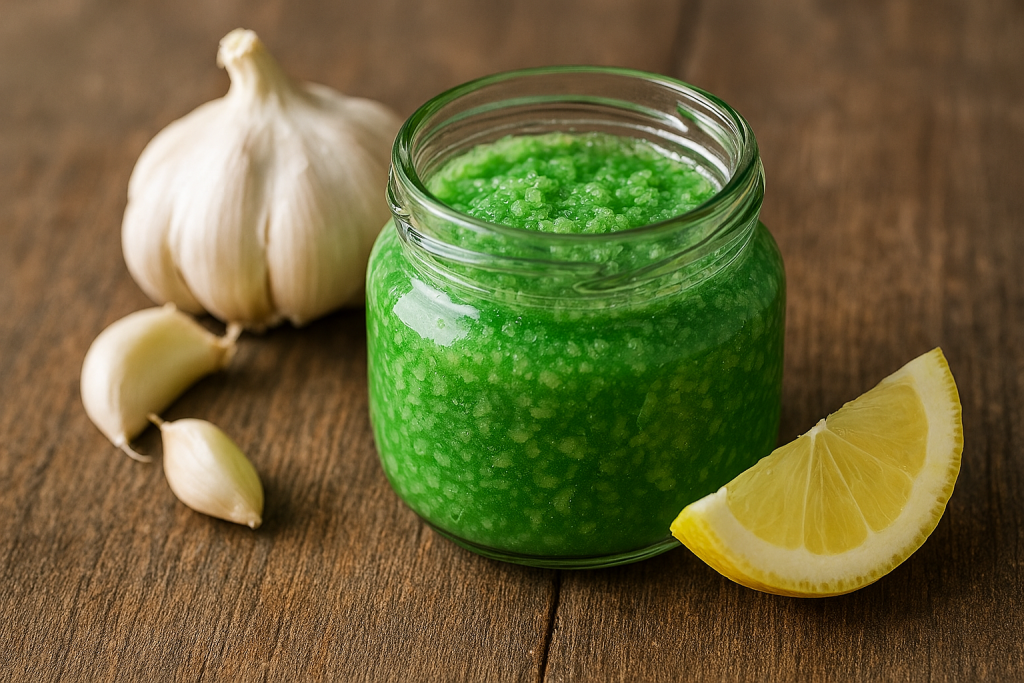
Seeing green garlic can be surprising, but it’s usually a sign of natural chemistry at work rather than spoilage. According to fermentation experts at Cultures for Health, the blue-green hue is a harmless reaction where alliinase converts alliin into allicin, which then interacts with acids to form pyrroles. The process is intensified when garlic is immersed in vinegar or another acidic solution. Even contact with copper utensils or minerals in water can trigger similar reactions.
Better Homes & Gardens also notes that this phenomenon is directly related to the same chemical reaction that gives garlic its fragrance. As soon as the cells are crushed, the compounds meet and begin reacting with each other and with amino acids, creating clusters of carbon-nitrogen rings that turn green. Older garlic or bulbs that have dried for a long time contain more of the precursor compounds, so they change color more readily.
In short, the green color doesn’t signal that the garlic is unsafe; it simply means the chemical reaction has advanced.
Factors That Make Garlic Turn Green
A few conditions make it more likely that your crushed garlic will develop a green or blue hue:
- Acids and marinades: Vinegar, lemon juice, wine and other acidic ingredients promote pyrrole formation. The longer the garlic sits in acid, the more intense the color.
- Low, slow cooking: Keeping garlic at a low temperature for long periods allows enzymes to continue converting alliin into allicin and pyrroles. Stir-fries and quick sautéing at higher heat reduce the reaction.
- Age and moisture: Older bulbs lose moisture, concentrating the compounds that cause color change. Garlic harvested early or not dried properly may contain more enzyme activity and can turn blue or green.
- Mineral contact: Trace amounts of copper or iron from utensils, tap water or fermentation jars can catalyze reactions that produce blue or green pigments.
Knowing these triggers can help you adjust your cooking and storage methods to minimize color changes.
Tips to Prevent Crushed Garlic From Turning Green
If you’re preparing garlic ahead of time or pickling it, you might want to avoid that color change. Here are some practical tips:
- Use fresh garlic: Choose younger bulbs with firm cloves and intact skins. Older garlic contains more alliin and alliinase and is more prone to turning green. When buying, look for bulbs without sprouting or shriveling.
- Add acids late: Incorporate vinegar, citrus juice and other acidic ingredients at the end of cooking or marinating. Food Republic explains that keeping garlic out of contact with acid until the last second reduces green hues.
- Keep garlic cold while prepping: Refrigerating garlic before cutting slows enzymatic activity. We recommend keeping garlic cold while chopping or grating and cooking it separately from onions, which can speed up the reaction.
- Cook quickly at high heat: High heat denatures enzymes faster and reduces the time for allicin to form pyrroles. Avoid low-temperature cooking if you want to keep garlic white.
- Blanching: Briefly boiling garlic cloves or slices can deactivate enzymes before adding them to acidic dishes.
- Use non-reactive utensils: Stainless steel, glass or food-grade plastic vessels prevent unwanted reactions with metals like copper or iron.
Applying these tips helps keep crushed garlic looking pale and mild in flavor. Still, the process can be fiddly – especially if you’re trying to prep garlic days ahead or if you need only a small amount. That’s where a freezer-friendly product shines.
How to Keep Crushed Garlic Fresh
Freshly crushed garlic has a short shelf life, even when stored in a sealed container in the fridge. Minced or crushed garlic often loses its pungency after a day or two and can develop off-flavors or even mold. Many home cooks try to extend its life by covering the garlic with oil, but this method requires careful refrigeration and hygiene to avoid food safety risks.
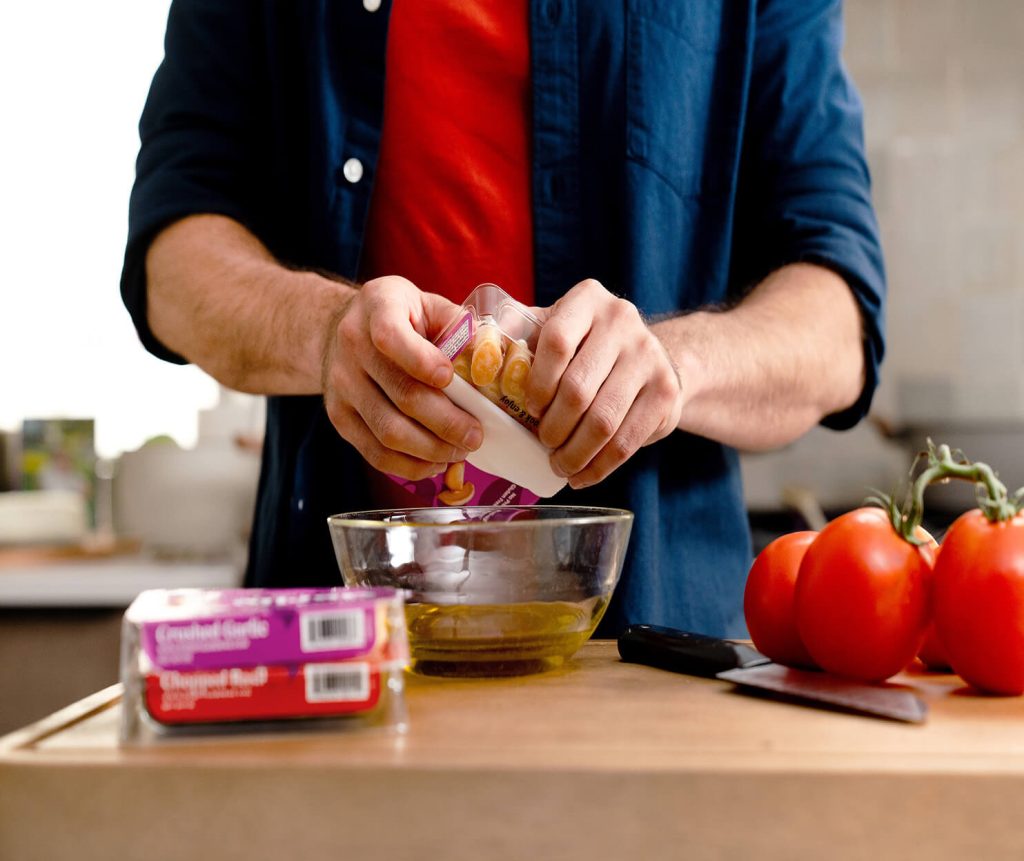
To preserve fresh flavor for weeks or months, freeze garlic in small portions. You can spoon minced garlic into ice cube trays and freeze it, then pop out the cubes and store them in a freezer bag. Alternatively, puree peeled cloves with a little water or oil and freeze the puree in small amounts. Frozen garlic retains much of its aroma because the enzymes become inactive when frozen.
However, preparing garlic for freezing takes time and leaves you with chopping boards and sticky knives to clean. If you’re looking for a ready-made solution, Dorot Gardens crushed garlic cubes make this process effortless.
Why Dorot Gardens Solves the Problem
Dorot Gardens offers pre-portioned crushed garlic cubes that are flash-frozen quickly after harvest to lock in fresh flavor and aroma. Each cube equals one teaspoon of crushed garlic, so you can drop it straight into a pan, sauce or soup without peeling, chopping or measuring.
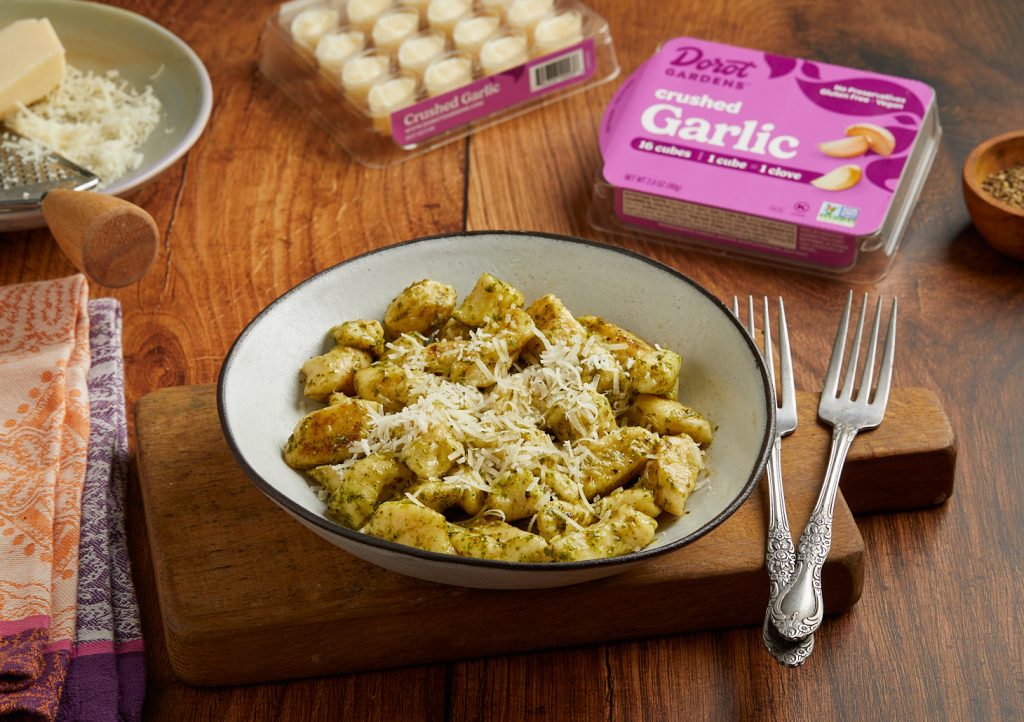
Because the cubes are stored in your freezer, there’s no risk of the garlic turning green – enzymatic reactions are stopped as soon as the garlic is frozen. That makes them perfect for cooks who want reliable garlic flavor without dealing with the messy prep or worrying about their garlic turning green.
Here’s why Dorot Gardens is a smart alternative:
- Consistent flavor: The garlic is picked, processed and frozen at peak freshness, delivering strong, reliable flavor every time.
- Zero prep: Pop out a cube and drop it into your recipe – no knife, no cutting board, no lingering odor on your hands.
- Long shelf life: Stored in the freezer, Dorot Gardens crushed garlic can last up to two years without losing flavor.
- Exact portions: Each cube equals one clove or one teaspoon of minced garlic, making it easy to follow recipes.
- Versatile: Add cubes to stir-fries, sauces, marinades, soups, dressings and even compound butter. They melt quickly and blend seamlessly.
You’ll find Dorot Gardens crushed garlic in the frozen vegetable aisle at select grocery stores. Use our store locator on the Dorot Gardens website to find a retailer near you.