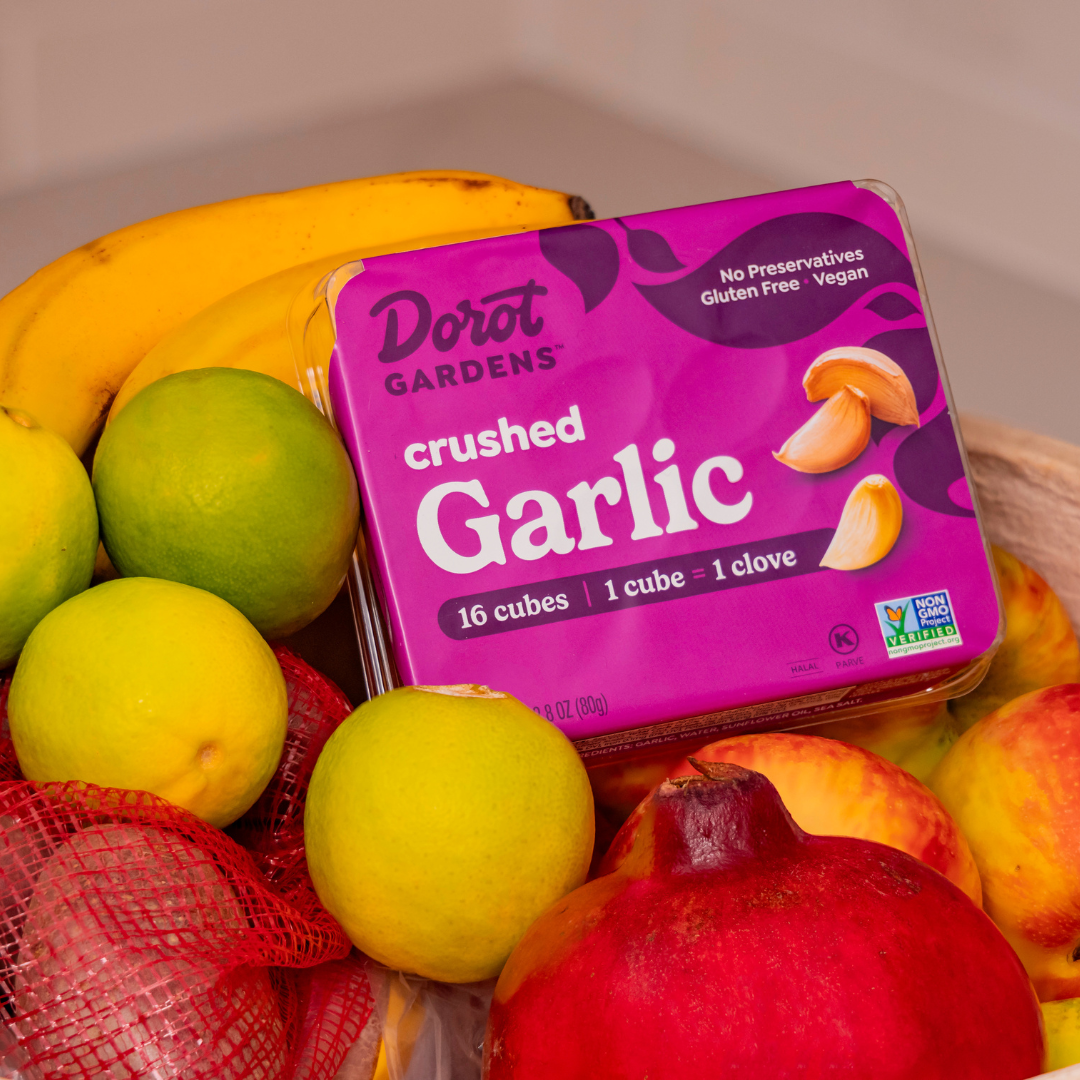
The way you prepare garlic affects both its flavor and how it blends into a dish. Crushed garlic usually means a clove flattened or smashed with the side of a knife, while minced garlic is chopped into very small pieces.
That difference affects how the garlic behaves as it cooks. Minced garlic spreads throughout a recipe, while a smashed clove releases flavor more gradually and can often be removed before serving. Garlic that’s pressed, grated, or mashed into a paste has an even finer texture and may taste more intense.
So, when you’re comparing crushed garlic vs. minced garlic, the best choice depends on the flavor and texture you want.
Crushed Garlic vs. Minced Garlic
Here’s the quick kitchen version:
| Crushed / Smashed Garlic | Minced Garlic | |
| Preparation | Clove is flattened or smashed | Clove is finely chopped |
| Texture | Larger, irregular pieces | Small pieces |
| Flavor | Adds flavor gradually and stays more localized | Spreads throughout the dish |
| Best for | Sauces, braises, soups, marinades, infused oils | Sautés, stir-fries, sauces, dressings |
| Easy to remove later? | Usually | No |
| Browning | Cooks more slowly | Cooks and browns more quickly |
The term “crushed” can mean different things depending on the recipe. It may refer to a whole clove smashed with a knife or to garlic pressed or mashed into a finer texture. If you’re unsure, check the instructions to see what consistency the recipe calls for.
What Does “Crushed Garlic” Actually Mean?
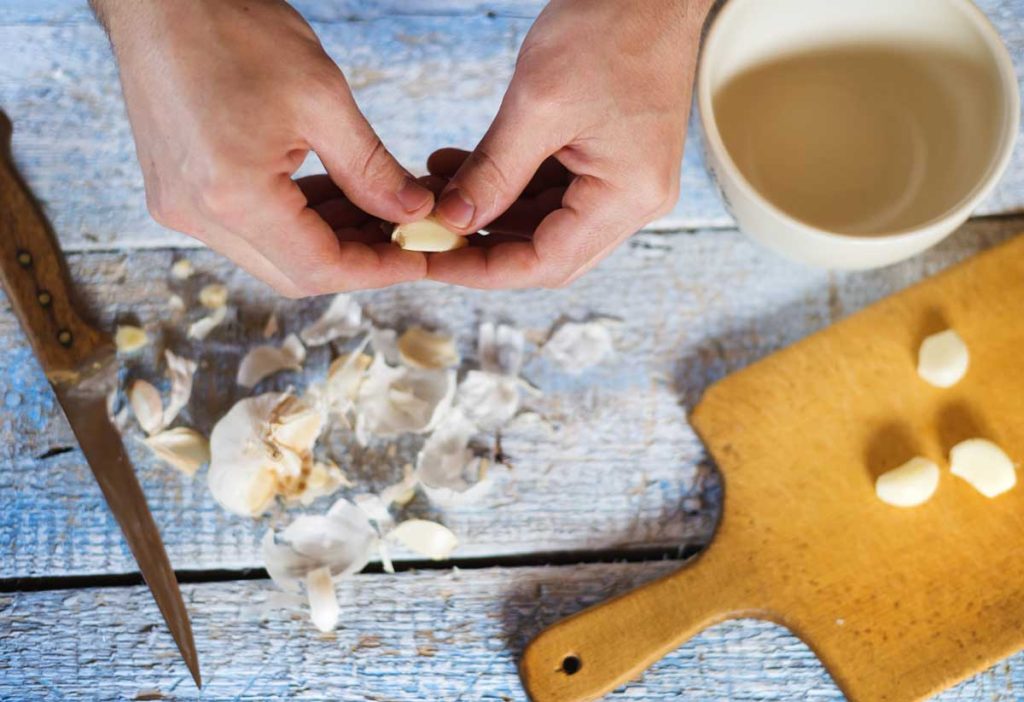
To crush garlic, place a peeled clove on a cutting board, lay the flat side of a chef’s knife over it, and press down firmly until the clove is flattened.
The garlic should remain in one larger piece rather than turn into a paste. This makes it useful for flavoring a sauce, braise, soup, or oil without leaving small pieces throughout the dish. You can also remove the clove before serving if you want a gentler garlic flavor.
A garlic press, Microplane, or mortar and pestle produces a finer texture instead. These methods break the garlic down more thoroughly, helping it blend into the dish and giving it a sharper flavor.
How Does Minced Garlic Change the Flavor?
To mince garlic, chop the peeled clove into very small pieces. Since the pieces are so small, they spread easily throughout a dish and add garlic flavor to more bites.
That makes minced garlic a good choice when you want it to remain part of the finished dish, whether you’re making a quick sauté, pasta sauce, stir-fry, dressing, or marinade.
The small pieces also cook quickly. If you’re sautéing minced garlic in oil, watch the pan closely and add the next ingredient once the garlic becomes fragrant. It can burn quickly, especially over high heat.
When Should You Use Crushed or Minced Garlic?
Neither preparation is automatically better. Instead, the right choice depends on how you want the garlic to work in the recipe.
Use crushed or smashed garlic when:
- You want to add flavor to a sauce, stew, braise, soup, or oil.
- You prefer larger pieces instead of garlic throughout every bite.
- You may want to remove the garlic before serving.
- You want a more subtle garlic flavor in the finished dish.
Use minced garlic when:
- You want the garlic flavor spread throughout the dish.
- You’re making a stir-fry, pasta sauce, quick sauté, dressing, or marinade.
- Small garlic pieces fit naturally into the finished recipe.
- You want garlic in every bite.
To try these differences for yourself, explore our garlic recipes for ideas ranging from sauces and vegetables to everyday mains.
Can You Substitute Crushed for Minced Garlic?
Yes, in many recipes, though the garlic will cook and spread differently.
For soups, stews, braises, and many cooked sauces, you can usually swap one preparation for the other. A smashed clove releases flavor as the dish cooks and can be removed later, while minced garlic stays in the dish and spreads throughout it.
The difference is more noticeable in quick sautés and stir-fries. Minced garlic cooks faster because the pieces are smaller, while a smashed clove takes longer to cook and may not distribute as evenly.
Either preparation can work in marinades and dressings. Finely minced or pressed garlic blends more easily, while a larger crushed clove gives a less even garlic flavor.
The distinction also matters in raw sauces. Since the garlic isn’t cooked, finely minced, pressed, or mashed garlic may taste stronger than a simply smashed clove.
There’s no single conversion that works for every recipe. Because “crushed” can refer to different textures, use the amount listed in the recipe as a starting point and adjust to taste.
If you specifically need a minced garlic substitute, see our guide to minced garlic alternatives for more options.
Where Do Frozen Garlic Cubes Fit?
If you want to add garlic to a recipe without peeling and chopping a fresh clove, frozen garlic cubes are a convenient option.
Dorot Gardens’ Garlic is made with peeled, minced garlic and frozen into pre-portioned cubes. Each cube is equal to one garlic clove, so it’s easy to use in recipes that measure garlic by the clove.
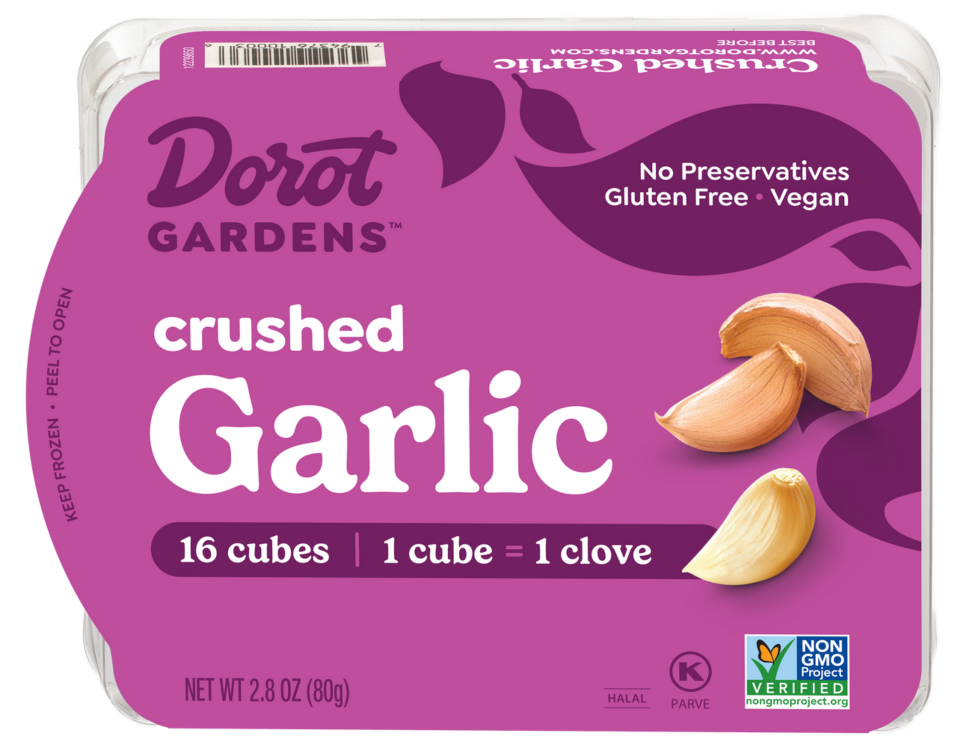
You can add the cubes straight from the freezer to a hot pan, sauce, soup, or other cooked dish without thawing them first.
The product name and the usual kitchen terms don’t describe exactly the same texture. Although the product name uses “crushed,” the garlic itself is prepared in a finer form before freezing. In practical terms, it’s a convenient way to add measured garlic to a recipe.
Frozen garlic cubes work especially well when the garlic will remain in the finished dish. If a recipe calls for a large smashed clove that will be removed later, use a whole fresh clove instead.