Fresh herbs can transform ordinary meals into something special. Whether you’re sprinkling bright basil over a pasta dish or stirring rosemary into a stew, cooking with fresh herbs adds aroma, color, and vibrant flavor that dried herbs can’t always match. Yet beginners often wonder which herbs to buy, how to prep them, and when to add them to a dish.
This guide answers those questions, highlights the most popular herbs for beginners, and introduces an effortless way to enjoy garden-fresh flavor all year long.
Why Cook with Fresh Herbs
Fresh herbs contain natural oils that deliver vibrant flavor and aroma. While dried herbs have their place, their oils concentrate during drying, yielding a stronger but sometimes flatter flavor. Fresh herbs bring brightness to dishes and can reduce the need for extra salt or fat.
The first step in learning how to use fresh herbs in cooking is understanding that each herb has its own personality. Some are bold and woody, while others are delicate and leafy.
The Most Popular Fresh Herbs for Cooking
Begin your herb journey with these versatile favorites. They appear in countless recipes and are easy to find at grocery stores or farmers’ markets. Knowing the most popular fresh herbs for cooking helps you stock your kitchen with the right flavors.
Basil
Basil is the star of Italian cuisine. Its sweet, slightly spicy leaves pair perfectly with tomatoes, garlic and mozzarella. This herb is commonly used in pesto, Caprese salads, pasta sauces and Thai stir-fries. Keep in mind that basil bruises easily and its delicate flavor dissipates with heat, so add it at the very end of cooking or use it raw as a garnish.
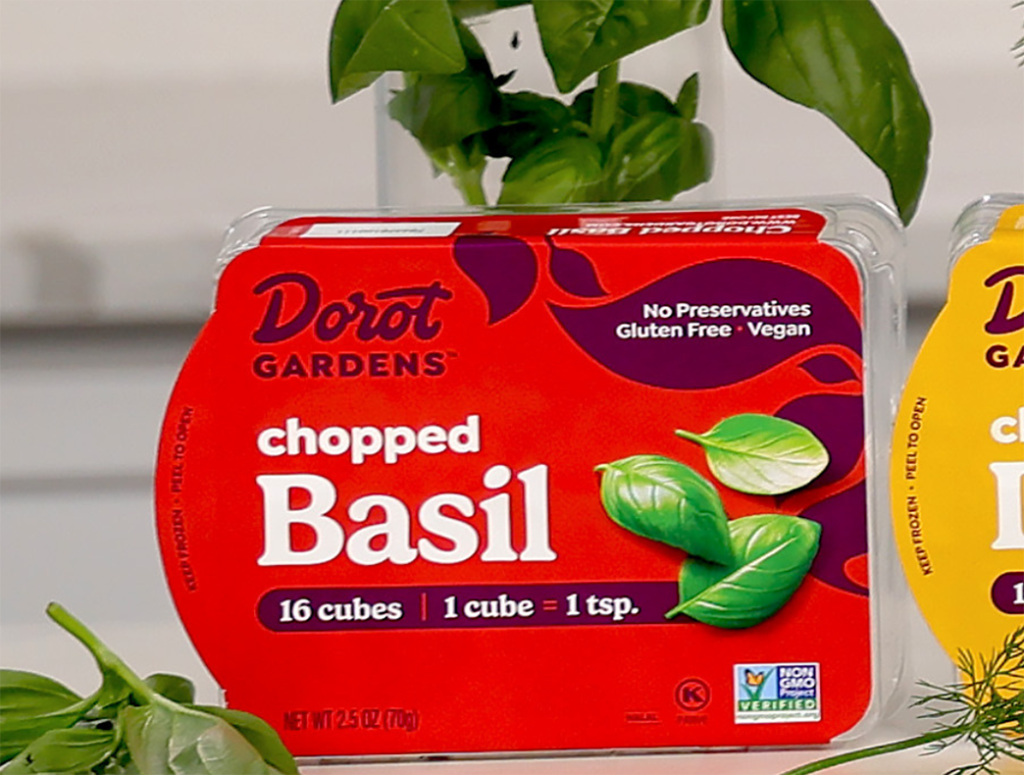
For convenience, try Dorot Gardens Chopped Basil cubes. They’re quickly flash-frozen after harvest, preserving basil’s aroma and color. Pop one into sauces or soups without the need for chopping.
Parsley
Parsley brings a clean, grassy note to almost any savory dish. Italian (flat-leaf) parsley is the more flavorful variety and works well in sauces, soups, salads and tabbouleh. Curly parsley is milder and often used as a garnish. Both varieties are loaded with vitamin K and vitamin C. To use parsley, finely chop it and sprinkle at the end of cooking to maintain its vibrant green color.
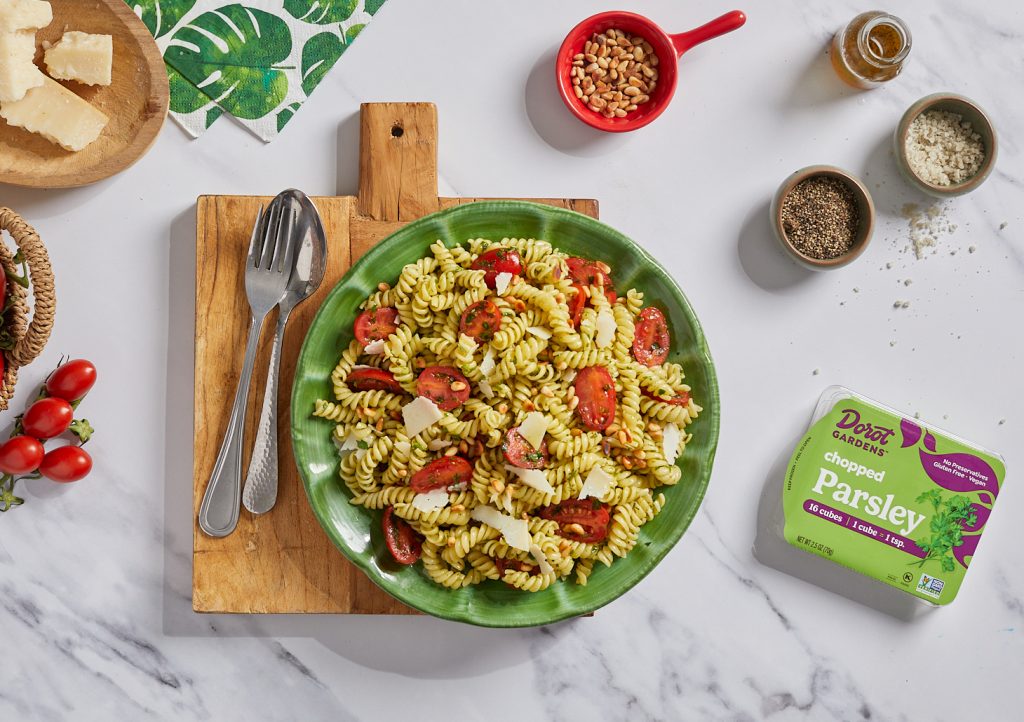
If you don’t have time to mince a bundle of parsley, Dorot Gardens offers chopped parsley cubes that eliminate washing and chopping while delivering the same fresh taste.
Cilantro
Popular in Mexican, Indian and Southeast Asian cooking, cilantro (also called coriander leaves) has a citrusy, bright flavor. It’s essential in salsas, guacamole, chutneys and curries. Because cilantro wilts quickly and loses color when heated, it should be added just before serving.
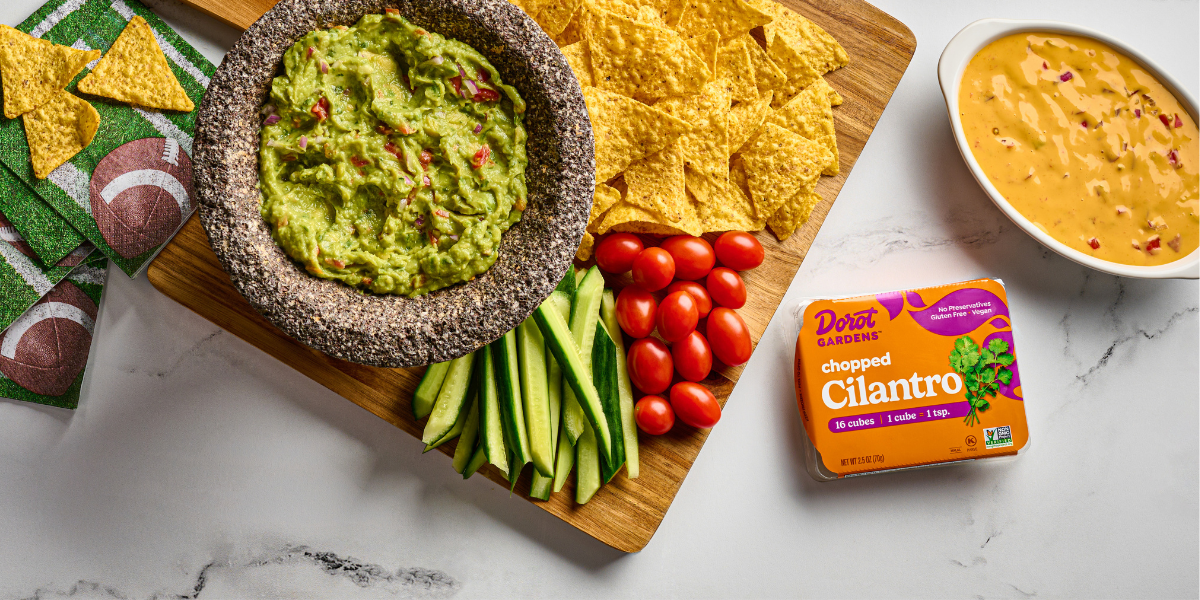
Many people struggle with cilantro because it spoils quickly, and Dorot Gardens Chopped Cilantro cubes solve this by keeping fresh flavor in your freezer.
Rosemary
This woody herb has needle-like leaves and a piney aroma. Rosemary is usually used when roasting potatoes, lamb, poultry and baking focaccia bread. You can also strip the leaves from the stem and finely chop them before adding at the beginning of cooking so the flavor can infuse the dish. A little goes a long way, so use rosemary sparingly to avoid overpowering delicate ingredients you’ll be using with it.
Thyme
Thyme’s tiny leaves offer earthy, floral notes that complement meats, beans, root vegetables and sauces. It’s a key ingredient in bouquet garni and Herbes de Provence. Thyme is a hardy herb that releases flavor slowly; it’s best to add it early in the cooking process. Here’s a tip: tie whole sprigs with kitchen twine for easy removal.
Mint
Mint has a cool, refreshing flavor which makes it a favorite addition to sweet and savory dishes. You can use it in salads, yogurt sauces, cocktails, teas and desserts. Add mint at the end of cooking or use it raw to preserve its bright taste. Many savory recipes, like Middle Eastern tabbouleh or Greek tzatziki, combine mint with parsley or dill for layered flavor.
Dill
With feathery fronds and a grassy, anise-like taste, dill elevates seafood, potatoes and pickles. It’s quite delicate, so add it just before serving or use it raw in dips and salads. If you love dill but hate watching it wilt in your crisper, you can try Dorot Gardens Chopped Dill cubes to keep this herb ready to drop into your favorite dishes.
Tip on Preparing Fresh Herbs
Proper herb preparation ensures you capture flavor without bruising delicate leaves. Start by selecting herbs with bright, unblemished leaves and firm stems.
When you bring them home:
- Rinse gently: Hold herbs under cool running water or dunk them in a bowl to remove dirt. Shake off excess water or spin them dry – wet leaves can rot quickly.
- Pat dry: Use paper towels or a clean cloth to remove moisture. Dry herbs last longer and chop more cleanly.
- Strip and chop: For tender herbs like basil, parsley or cilantro, hold the stems and run your fingers along them to strip off the leaves. For woody herbs like rosemary or thyme, use your thumb and forefinger to strip the leaves in the opposite direction of growth. Chop leaves with a sharp knife to avoid bruising.
- Store properly: Wrap herbs in a damp paper towel and place them in a sealed bag in the refrigerator. Alternatively, keep stems in a glass of water with a loose plastic bag over the top – this works well for parsley and cilantro. Use herbs within a few days for maximum freshness.
You don’t need to worry about preparing fresh herbs anymore with Dorot Gardens herb cubes. The herbs are prepared, measured, and turned into frozen cubes. You get the same flavor without washing and chopping, and it significantly reduces the risk of spoilage.
Do You Add Fresh Herbs Before or After Cooking?
One of the most common questions beginners ask is, “Do I add the fresh herbs before or after cooking?” The answer depends on the herb’s texture and how robust it is.
Soft herbs like parsley, basil and cilantro have tender stems packed with moisture; they’re prone to bruising and oxidizing when exposed to heat for too long. To preserve their flavors, add them in the final minutes of cooking or use them raw as a garnish.
Now when talking about woody herbs like rosemary, thyme and sage, they’re tougher and more resilient. They need longer cooking time to soften and release their oils; that’s why they should be added early and cooked with aromatics or sauces. For cold dishes like salsa or salads, herbs can be added at any point, but delicate herbs will retain their color and flavor longer if added just before serving.
As a rule of thumb, add robust herbs at the start and delicate herbs at the end. That way, you get both depth and freshness in the same dish.
Tips for Cooking with Fresh Herbs
Here are a few additional pointers for cooking with fresh herbs and maximizing flavor:
- Balance flavors: Pair herbs with ingredients that complement them. Basil loves tomatoes and garlic; dill pairs with fish and potatoes; mint brightens peas and lamb. When experimenting, start with small amounts, around one tablespoon of fresh herbs for every four servings, then taste and adjust.
- Substitute dried herbs carefully: If a recipe calls for dried herbs, you can replace them with fresh ones, but you’ll need more. A common ratio is three parts fresh to one part dried. For example, one teaspoon of dried oregano equals about one tablespoon of fresh oregano. This conversion ensures you don’t under-season your dish.
- Mix herbs: Combining multiple herbs adds complexity. Try basil and oregano in marinara sauce, parsley and mint in tabbouleh, or dill and chives in potato salad. Just make sure that the herbs you use complement each other.
Dorot Gardens: An Easy Way to Cook with Herbs
If you love the idea of cooking with fresh herbs but dread cleaning and chopping them, Dorot Gardens is here to help. Dorot grows herbs at peak ripeness, washes and chops them, then flash-freezes them into pre-measured cubes.
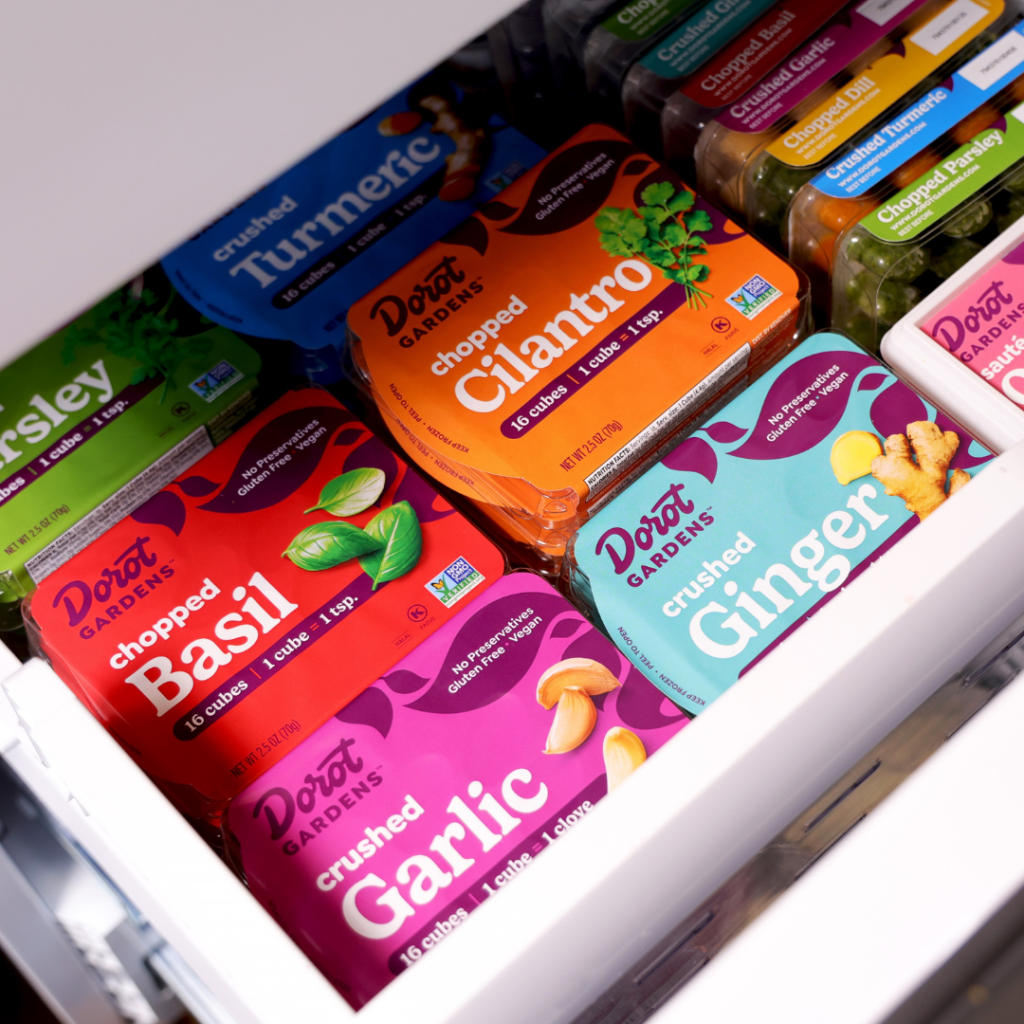
Each cube equals about a teaspoon of fresh herb. Just pop a cube into your pan or bowl – no knife, no bruised leaves, no waste. Dorot’s product line includes basil, parsley, cilantro, dill, garlic, ginger and more, which makes cooking easier and faster.
Here’s why Dorot Gardens herb cubes are perfect for beginners:
- Convenience: You always have fresh herbs on hand without buying bunches that wilt in the fridge.
- Consistency: Each cube contains a measured amount, so it’s easy to follow recipes and adjust seasoning.
- Waste reduction: Because the cubes are frozen, they last for months and you use only what you need.
- Time savings: Skip the washing, drying and chopping. Simply pop, drop and cook.
You can find Dorot Gardens herb cubes in the frozen vegetable aisle of many grocery stores. Use our store locator to find a retailer near you.