
Crushed garlic usually means a garlic clove that’s been pressed or smashed until it breaks open. Unlike minced garlic, it stays as a flattened clove or a few larger pieces instead of being chopped into tiny bits.
That texture works well in soups, sauces, stews, marinades, and other dishes where you want garlic flavor without lots of small pieces mixed through the food.
Keep Garlic Ready in Your Freezer
Want real garlic flavor without the peeling and chopping? Dorot Gardens Crushed Garlic comes in pre-portioned frozen cubes, so you can use what you need and save the rest for your next meal.
One frozen garlic cube = one garlic clove.
Pop. Drop. Done.®

What Does “Crushed Garlic” Mean?
When a recipe uses this term, it usually means a clove that’s been smashed firmly enough to split and flatten.
It stays much coarser than minced garlic, which is cut into small pieces, and it doesn’t go as far as becoming a smooth garlic paste.
Crushing the clove helps release the compounds behind garlic’s familiar aroma and flavor while keeping the garlic in larger pieces. Depending on the recipe, those pieces can also be removed before serving.
What Does It Look Like?
The finished clove doesn’t need to look neat or uniform.
A freshly crushed clove will usually be flattened, cracked, and a little broken up. The papery skin may split or loosen, too, making it easier to peel away.
The garlic itself should look coarse and uneven rather than like the small, consistent pieces you’d expect from minced garlic.
If the clove breaks into two or three larger chunks, that’s completely fine. A typical crushed garlic clove should still look flattened and roughly broken rather than finely chopped or worked into a paste.
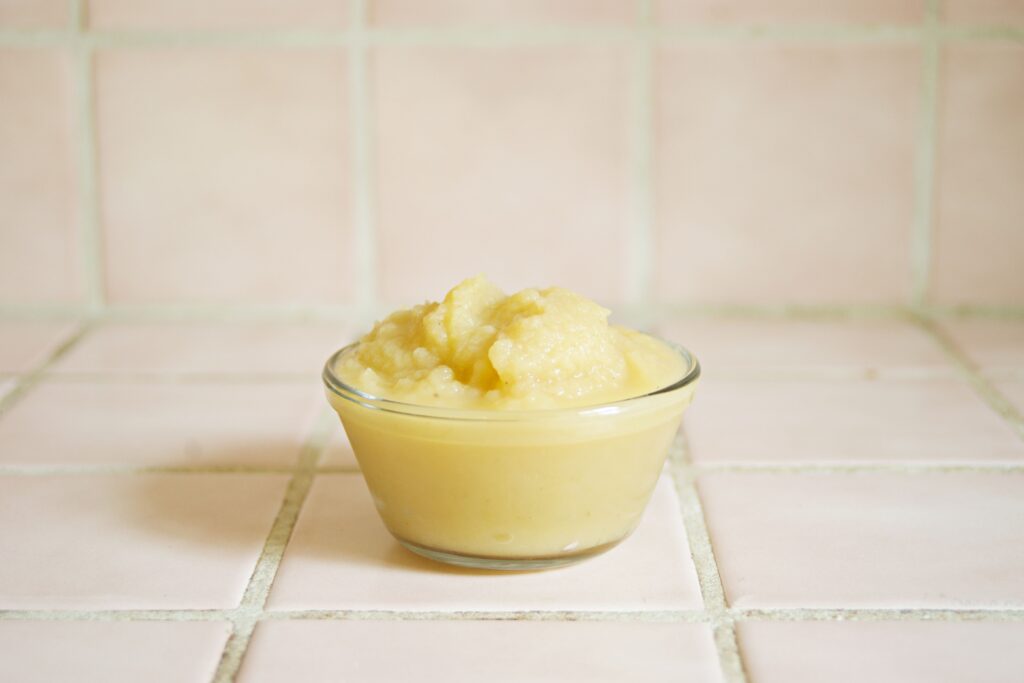
How to Crush Garlic Cloves Step by Step
You don’t need a special tool to crush fresh garlic. A chef’s knife and a cutting board are enough.
- Separate the clove. Break off the number of garlic cloves you need from the bulb. You can leave the papery skin on for now.
- Position your knife. Place the broad, flat side of a chef’s knife over the garlic clove, with the cutting edge pointed away from your hand.
- Keep your fingers clear. Make sure your fingers are away from the cutting edge, then carefully press down on the flat side of the blade.
- Press the clove. Apply firm, even pressure until the garlic flattens and the skin splits.
- Remove the skin. Lift the knife and peel away the loosened skin. It’s now ready to use.
If you want a finer texture, keep chopping. If the recipe simply asks for a crushed clove, though, the flattened garlic is usually all you need.
Crushed vs. Minced Garlic: What’s the Difference?
Crushing and mincing both break down garlic, but they leave you with different textures.
| Feature | Crushed | Minced |
| Preparation | Clove is pressed or smashed | Clove is finely chopped |
| Texture | Flattened clove or larger, uneven pieces | Small, finely chopped pieces |
| Distribution | Garlic stays in larger pieces | Garlic pieces are distributed more evenly throughout the dish |
| Removal | Larger pieces may be easier to remove before serving | Small pieces usually remain in the dish |
| Common Uses | Soups, stews, braises, sauces, marinades | Stir-fries, sauces, dressings, garlic butter |
Neither one is automatically better. The right choice comes down to what the recipe calls for and the texture you want.
If a recipe says “1 clove, crushed,” follow that direction where possible. If it calls for minced garlic, finely chopping it will spread the pieces more evenly throughout the food.
When Should You Use It?
This preparation works well in dishes where larger pieces can sit with the other ingredients as they cook.
You might use it in:
- Soups
- Stews
- Braises
- Pasta sauces
- Marinades
- Roasted dishes
Because the garlic stays in larger pieces, it can also be useful when you want the option of removing it before serving.
If you’d rather have smaller pieces spread throughout the dish, mincing may be the better choice.
Keep Dorot Gardens Crushed Garlic Ready to Go
Crushing fresh garlic only takes a few steps, but some nights you just want to get dinner started.
Dorot Gardens Crushed Garlic comes in pre-portioned frozen garlic cubes, making it easy to add garlic to your favorite dishes without peeling or chopping fresh cloves. Simply take out the amount you need and add it straight to your pan, soup, sauce, or other recipe.

One Dorot Gardens frozen garlic cube equals one garlic clove.
For hot dishes, there’s no need to thaw the cubes first. Just pop out the amount your recipe needs and add it straight to your pan, soup, sauce, or other dish.
Looking for something to make next? Browse our collection of garlic recipes or explore all Dorot Gardens products to see what else you can keep ready in your freezer.
Frequently Asked Questions (FAQs)
Can minced garlic work as a crushed garlic substitute?
It can, depending on the recipe. Finely chopped garlic spreads through the dish differently instead of staying as one larger piece. If the recipe relies on a crushed clove that can be removed later, using a finer texture will give you a different result.
Is using a garlic press the same as crushing garlic with a knife?
Not exactly. Smashing a clove with the flat side of a knife usually leaves you with a flattened clove or several larger pieces.
A garlic press breaks the clove down more finely, so the texture is different.
What should I do when a recipe says “1 clove, crushed”?
Take one garlic clove and carefully press it with the flat side of a chef’s knife until it flattens and splits.
If you’re using Dorot Gardens Garlic instead, one frozen garlic cube equals one garlic clove.
Bringing It All Together
Once you know what crushed garlic looks like, recipe instructions are much easier to follow. A crushed clove is simply flattened and broken open rather than finely chopped or worked into a paste.
You can crush fresh cloves with a chef’s knife or keep Dorot Gardens Crushed Garlic in the freezer for nights when you want garlic ready without the peeling and chopping.